

Driving today feels very different compared to a decade ago and tyres are a big reason why. Thanks to new tyre technologies, the way vehicles grip the road, handle corners, save fuel, and keep passengers comfortable has completely changed. Tyres are no longer just rubber components; they are smart, efficient, and safety-focused systems built with modern tyre technology.
In this guide, we’ll explore how advanced tyre technology, innovative tyre solutions, and smart tyre technology are reshaping the driving experience using clear explanations, tables, and a performance chart to make everything easy to understand.
Introduction to Modern Tyre Technology
Tyres are the only part of your vehicle that touches the road. That alone makes them critical. With rising expectations for safety, comfort, and fuel efficiency, manufacturers are investing heavily in tyre technology advancements.
What used to be simple rubber rings are now next-generation tyres designed with data, sensors, and sustainability in mind.
What Is Modern Tyre Technology?
Modern tyre technology refers to the use of advanced materials, intelligent design, and digital systems to enhance tyre performance, safety, and durability.
Key Features of Modern Tyres
- Smart sensors for pressure and temperature
- Low rolling resistance compounds
- Adaptive tread patterns
- Eco-friendly and recycled materials
These features form the backbone of innovative tyre solutions.
The Evolution of New Tyre Technologies
Earlier tyres focused mainly on durability. Today, advanced tyre technology balances performance, efficiency, and comfort.
How Tyre Technology Works
Modern tyres use:
- Silica-based rubber for better grip
- Computer-optimized tread patterns
- Reinforced sidewalls for stability
This evolution has led to significant improvements in real-world driving.
Table: Traditional Tyres vs Modern Tyre Technology
| Feature | Traditional Tyres | Modern Tyre Technology |
| Safety | Basic grip | Advanced braking & traction |
| Comfort | Average vibration control | Smooth & quiet ride |
| Fuel Efficiency | Higher fuel usage | Reduced rolling resistance |
| Durability | Shorter lifespan | Longer tread life |
| Handling | Standard control | Precise steering response |
| Smart Features | None | Sensors & real-time data |
This table clearly shows how new tyre technologies outperform older designs across every major category.
Advanced Tyre Technology and Driving Performance
Improved Grip and Handling
Advanced tread designs increase road contact, especially during cornering and braking. This improves driver confidence and stability.
Tyre Performance Technology in Action
Better grip means:
- Faster response
- Reduced skidding
- Improved steering accuracy
That’s the power of tyre performance technology.
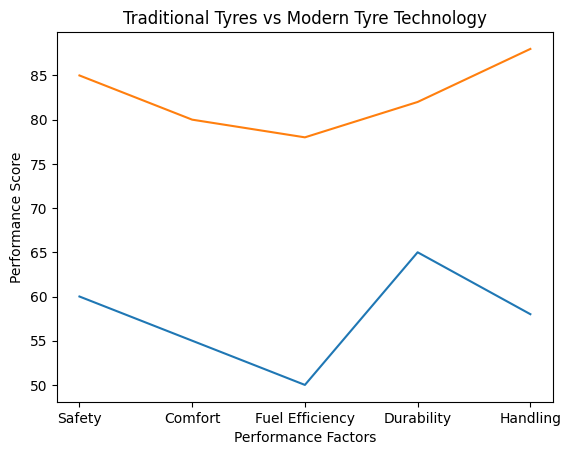
Chart: Traditional Tyres vs New Tyre Technologies
The chart above visually compares traditional tyres and modern tyre technology across:
- Safety
- Comfort
- Fuel Efficiency
- Durability
- Handling
What the Chart Reveals
- Modern tyres outperform traditional tyres in every category
- Handling and safety see the biggest improvements
- Fuel efficiency gains reduce long-term costs
This proves how tyre technology improves the driving experience in measurable ways.
Smart Tyre Technology Explained
Smart tyre technology uses built-in sensors to monitor:
- Air pressure
- Temperature
- Tread wear
Benefits of Smart Tyres
- Early warning of tyre problems
- Reduced risk of blowouts
- Better fuel efficiency
Smart tyres act like a health monitor for your vehicle.
Role of Tyre Technology in Road Safety
Shorter Braking Distances
Advanced rubber compounds allow tyres to stop faster, especially on wet roads.
Better Performance in Extreme Conditions
Modern tyres are designed to adapt to heat, rain, and uneven terrain, improving overall road safety.
Tyre Innovations for Better Fuel Efficiency
Low Rolling Resistance Technology
Modern tyres require less energy to roll, meaning your engine works less.
Benefits
- Lower fuel consumption
- Reduced carbon emissions
- Cost savings over time
This is a major reason tyre innovations for better fuel efficiency are gaining popularity.
Table: Latest Tyre Innovations and Their Benefits
| Innovation | Purpose | Driver Benefit |
| Smart Tyres | Real-time monitoring | Increased safety |
| Self-Sealing Tyres | Seal punctures | Fewer breakdowns |
| Airless Tyres | No air pressure | Zero puncture risk |
| Adaptive Tread | Adjusts to roads | Better grip |
| Eco Tyres | Sustainable materials | Lower emissions |
How Modern Tyres Improve Comfort and Handling
Noise Reduction Technology
Special tread patterns reduce road noise, making rides quieter and more enjoyable.
Smoother Driving Experience
Better shock absorption ensures comfort on city roads and highways alike.
Tyre Technology Trends Shaping the Future
The future of tyre technology includes:
- AI-powered tyres
- Connected vehicle systems
- Fully sustainable tyre manufacturing
These tyre technology trends are set to redefine mobility.
Impact of Tyre Innovation on Driving
Confidence and Control
Drivers feel safer knowing their tyres adapt to changing conditions.
Long-Term Cost Benefits
Durable materials and fuel efficiency lead to lower ownership costs.
Conclusion
New tyre technologies are transforming the driving experience from the ground up. With modern tyre technology, smart tyre technology, and next-generation tyres, drivers enjoy better safety, comfort, fuel efficiency, and control. Tyres are no longer passive components they are intelligent systems designed to make every journey safer and smoother. As innovation continues, the road ahead looks more efficient, sustainable, and secure.
FAQs
1. What is modern tyre technology?
It uses advanced materials and smart systems to improve safety, performance, and efficiency.
2. How tyre technology improves driving experience?
By enhancing grip, comfort, handling, and fuel economy.
3. Are smart tyres worth it?
Yes, they provide real-time alerts and reduce safety risks.
4. How do modern tyres save fuel?
They reduce rolling resistance, requiring less engine power.
5. What is the future of tyre technology?
AI-driven, eco-friendly, and fully connected tyres.


